


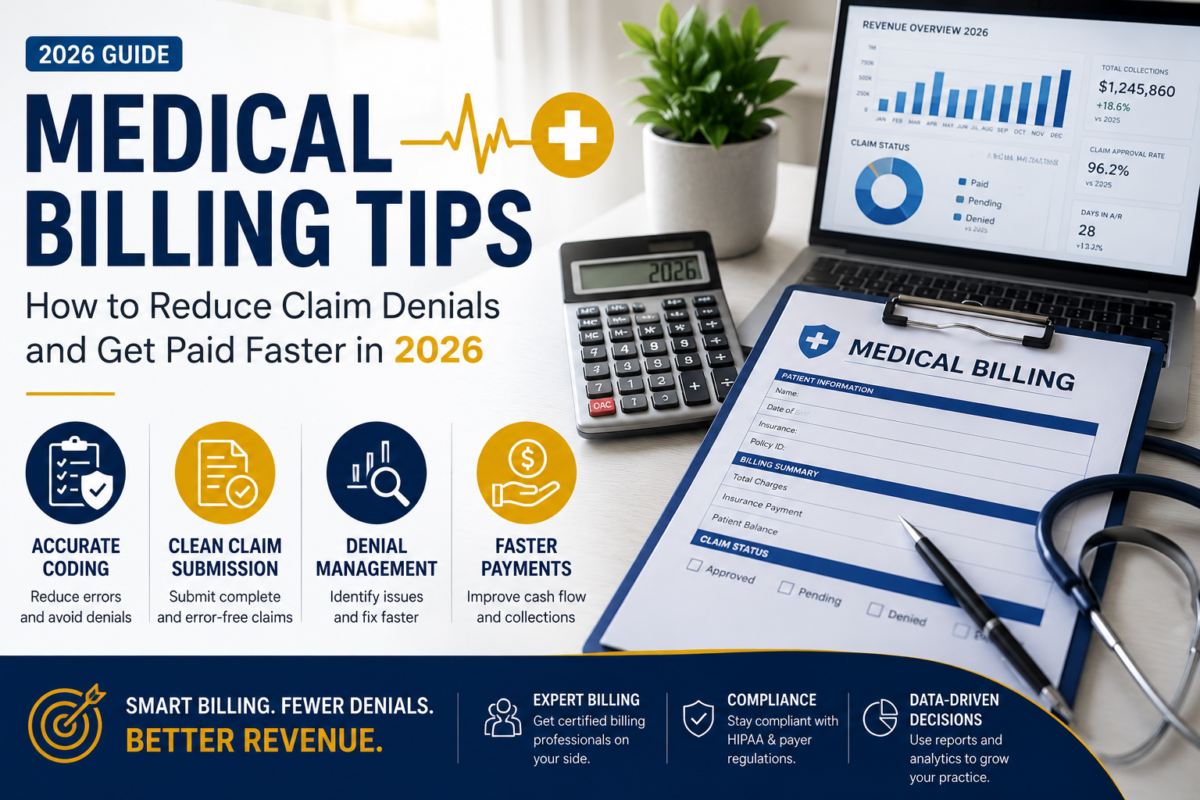
How to Reduce Claim Denials and Get Paid Faster in 2026
In today’s healthcare industry, efficient medical billing is essential for maintaining a healthy cash flow. Claim denials, delayed reimbursements, and billing errors can significantly impact a practice’s revenue. Whether you operate a private clinic, group practice, or healthcare organization, optimizing your billing process can improve collections and reduce financial losses.
Why Claim Denials Happen
Many healthcare providers lose revenue due to preventable billing mistakes. The most common causes of claim denials include:
1. Eligibility Verification Errors
Patient insurance information may change frequently. Failure to verify eligibility before appointments can result in denied claims.
2. Coding Mistakes
Incorrect ICD-10, CPT, or HCPCS codes are among the leading causes of claim rejections. Missing modifiers and coding inaccuracies can delay payments and increase administrative workload.
3. Late Claim Submission
Most insurance companies enforce strict filing deadlines. Claims submitted after the allowed timeframe are often denied and may not be recoverable.
4. Missing Documentation
Incomplete medical records or insufficient supporting documentation can trigger denials during claim review.
Five Proven Strategies to Get Paid Faster
1. Verify Insurance Eligibility Before Every Visit
Conduct real-time eligibility checks before patient appointments to ensure active coverage and avoid billing surprises.
2. Scrub Claims Before Submission
Implement claim-scrubbing processes to identify missing information, coding issues, and demographic errors before claims are submitted.
3. Submit Claims Quickly
Aim to submit claims within 24 to 48 hours after services are provided. Faster submission reduces delays and helps maintain steady cash flow.
4. Monitor Accounts Receivable Regularly
Track unpaid claims and follow up at regular intervals. Establish a process for reviewing claims at 30, 60, and 90 days to prevent aging accounts from becoming uncollectible.
5. Appeal Denied Claims Strategically
Many denied claims can be successfully overturned when supported by proper documentation. Review denial reasons carefully and submit timely appeals whenever appropriate.
The Importance of Compliance
Medical billing operations must comply with HIPAA regulations and other healthcare privacy requirements. Regular compliance audits help protect patient information, reduce legal risks, and strengthen payer relationships.
When Should You Consider Outsourcing Medical Billing?
Outsourcing may be beneficial if your organization experiences:
- Increasing claim denial rates
- Growing accounts receivable balances
- Staffing shortages in billing departments
- Delayed reimbursements
- Difficulty keeping up with regulatory changes
A professional medical billing company can provide certified coding expertise, denial management, accounts receivable follow-up, and detailed performance reporting.
Final Thoughts
Reducing claim denials and improving reimbursement speed requires a proactive approach. By verifying eligibility, improving coding accuracy, submitting claims promptly, and following up consistently, healthcare providers can significantly increase collections and strengthen financial performance.
Investing in efficient billing practices today can lead to higher revenue, fewer denials, and a more sustainable healthcare operation in the future.